

This post is also available in:
 German
Which Model Should You Pick?
The PlayStation Vita has officially transitioned from a cult classic to a must-have collector’s item. In 2026, I get asked the same question almost daily: “Which one should I buy?” Whether you want that legendary OLED pop, a practical slim design for travel, or the “sleeper” experience of the PlayStation TV, this guide breaks down the hardware, the skyrocketing repair costs, and where to find the best deals today.
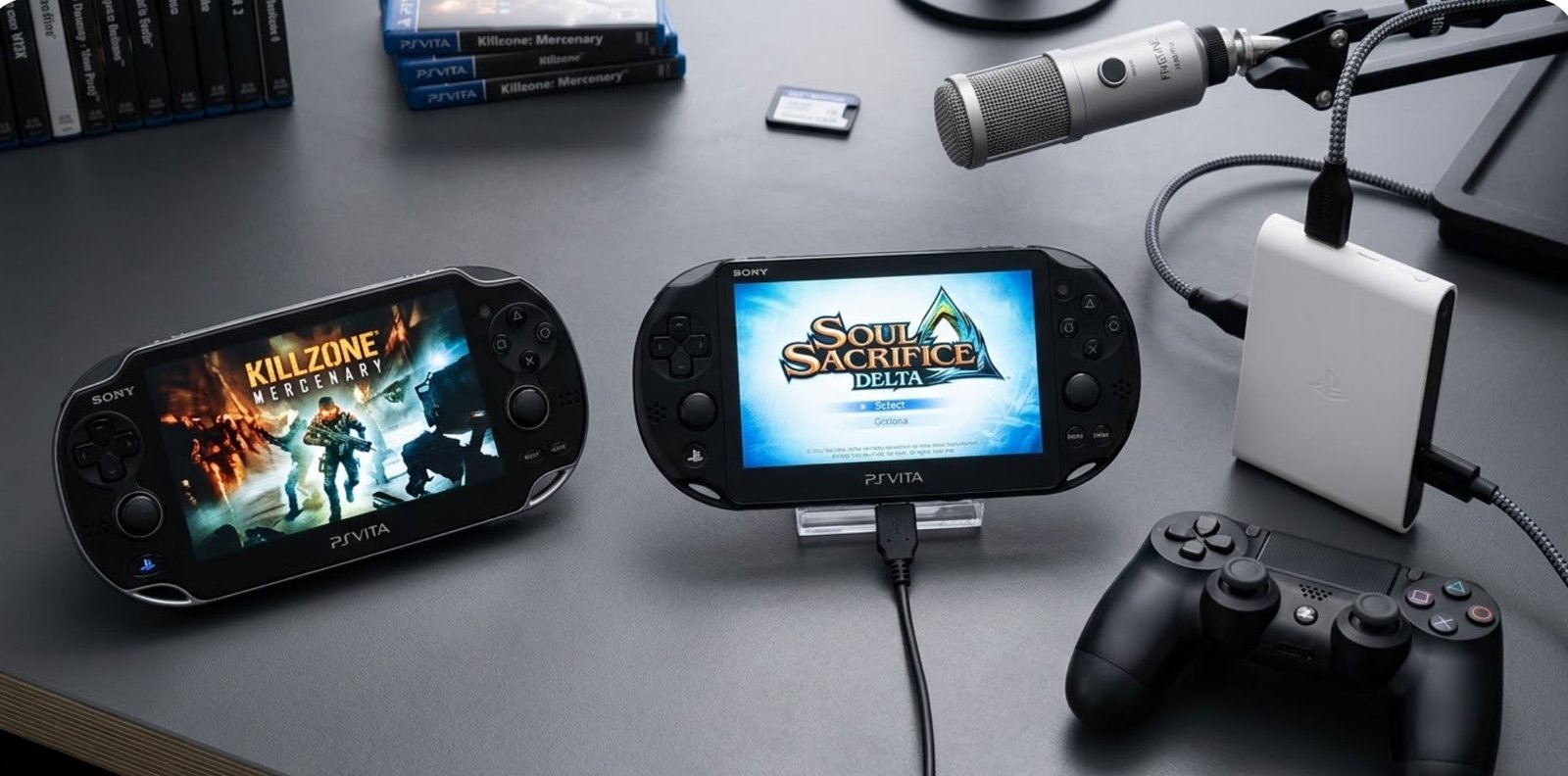
The Three Contenders: At a Glance
| Feature | PS Vita 1000 (OLED) | PS Vita 2000 (Slim) | PS TV (Micro-console) |
| Display | 5-inch OLED | 5-inch LCD | HDMI to TV/Monitor |
| Charging | Proprietary Port | Standard Micro-USB | AC Adapter |
| Internal Storage | None (Requires Memory Card) | 1 GB Built-in | 1 GB Built-in |
| Build Quality | Premium Metal/Glass | Lightweight Plastic | Tiny Plastic Box |
| Analog Sensors | Hall Effect (Drift-Resistant) | Potentiometer (Drift-Prone) | Uses External Controller |
The Price is Right (Finally!)
Back in 2023 and 2024, PS Vitas were averaging between $200 and $400, which was a rough entry price. I remember importing a Japanese model in 2019 for nearly $400!
Nowadays, the market has settled. You can readily find Vitas on eBay for anywhere between $100 to $250, depending on the model and condition. At that price point, you are getting a remarkably competent experience for both native gaming and emulation.
PS Vita 2026 Price & Feature Comparison
| Feature | PS Vita 1000 (OLED) | PS Vita 2000 (Slim) |
| Market Price (Used) | $130 – $180 | $110 – $170 |
| Collector Price (CIB) | $230+ | $190+ |
| Screen Type | 5″ OLED (Vivid colors, deep blacks) | 5″ LCD (Brighter, but less contrast) |
| Charging Port | Proprietary Sony Cable | Standard Micro-USB |
| Storage | 0 GB (Requires Memory Card) | 1 GB Internal (Good for initial mod) |
| Best For | Collectors & “Screen Snobs” | Daily Players & Travelers |
The 2026 Market Breakdown
The “Japan Import” Meta: Most of the high-quality stock on eBay right now comes from Japan. These units are usually listed by “Rank” (S, A, or B). An S-Rank (Mint) Vita 1000 can still fetch over $200, while a B-Rank (Good) Slim can often be found for as low as $110.
The Color Premium: While Black is the standard, 2026 collectors are paying a premium for Aqua Blue, Glacier White, and Metallic Red. Expect to add $30–$50 to the base price for these specific colors.
The 3G Advantage (PCH-1100): If you are a modder, look specifically for the 1100 model. It stays in the same price range as the 1000 but allows for the internal PSVSD storage mod, which is the gold standard for Vita hardware in 2026
The Modding Scene: Easier Than Ever
If you haven’t touched the Vita modding scene since 2021, you’ll be shocked at how far it has come. It used to be a process; now, it takes about 15 minutes.
Browser-Based Mods: You can now mod your Vita directly through the device’s web browser.
The “Port” Revolution: The community has ported a massive library of classic Android games to the Vita. We’re talking about native-feeling versions of:
Call of Duty Zombies
Dead Space Mobile
Assassin’s Creed Mobile
The “Store” Experience: With the PKGj store, you have access to the entire digital library of Vita titles right at your fingertips.
1. PlayStation Vita 1000 (The “Premium” Pick)
Often called the “OLED model,” this is the original vision for the Vita.
The Pros: The OLED screen is still the star of the show with deeper blacks and saturated colors that make PSP and emulated games pop. It uses Hall Effect analog sticks, which are far more resistant to stick drift than modern consoles.
The Cons: Repair costs in 2026 have become insane. An analog stick replacement can cost you $30–$40 for parts alone overseas, and up to $70 locally. It also uses a proprietary charging port, meaning if your cable breaks, you can’t just grab a spare phone charger.
Model Tip: If you can find the PCH-1100 (3G Model), buy it. You can replace the useless 3G module with a PSVSD module to add internal microSD storage while keeping your physical game slot free.
2. PlayStation Vita 2000 (The “Practical” Pick)
The “Slim” model was designed to be 20% thinner and 15% lighter.
The Pros: This is the most comfortable model for long gaming sessions. It charges via standard Micro-USB, has better battery life, and the analog sticks are much cheaper to replace ($10–$15) if they ever drift.
The Cons: You lose the OLED. While the LCD is good, placing it next to a 1000 model reveals more “washed out” colors.
The Variety: The 2000 comes in dozens of color variations (Neon Orange, Aqua Blue, Pink/Black). Most of these were Japan exclusives, so you’ll likely be importing.
3. PlayStation TV (The “Sleeper” Pick)
A tiny micro-console that lets you play Vita, PSP, and PS1 games on your big screen using a DualShock 3 or 4.
The Pros: It’s the ultimate couch-gaming experience for the Vita library. Since there’s no screen to crack or internal sticks to wear out, it’s arguably the most durable “Vita” hardware.
The Cons: Compatibility. Without a touchscreen or rear touchpad, many games won’t work out of the box. While modding can “whitelist” games, stock users will find a chunk of the library unplayable.
Market Alert: These have become extremely rare. Expect to pay $160–$250 for a unit, often without a controller.
Essential Hardware: The SD2Vita
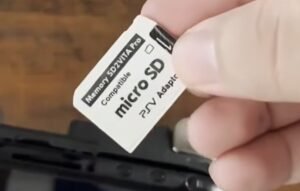
If you buy a Vita today, an SD2Vita adapter is an absolute necessity. Sony’s proprietary memory cards are still incredibly expensive and prone to failure.
The Trade-off: You lose the physical game card slot.
The Reward: You gain massive storage capacity (using standard microSD cards) to house your entire digital collection.
Emulation & Multimedia Power
The Vita is uniquely positioned as a “PlayStation Powerhouse.”
Native Support: It runs PSP and PS1 titles natively (via Adrenaline), meaning no weird emulation glitches for those libraries.
Retro Support: It handles NES, SNES, Game Boy, and Genesis perfectly. It can even handle some Dreamcast and N64 if you’re willing to tinker.
The Multimedia “Weirdo” Factor: I still love using the Vita as a hub for movies and TV shows. In an era of streaming, there is something nostalgic and reliable about having MP4s of Family Guy or YouTube downloads saved locally for a road trip. It’s a great movie-watching experience.
Where to Buy in 2026?
I 100% recommend eBay over local marketplaces for two reasons:
eBay Money Back Guarantee: If the console arrives with a hidden defect (like a dead pixel or bad battery), you get your money back.
Japanese/Chinese Imports: Japanese or chinese sellers (like Lucky Trading or Aliexpress) tend to take incredible care of their consoles. You can find “MINT” condition units that look like they were never played.
Pro Tip: Avoid “Rare” variations like the Hatsune Miku or Soul Sacrifice editions unless you are a hardcore collector. These can easily exceed $300–$600.
Final Verdict: Which one is for you? The 2026 Perspective
With rumors swirling about a new Sony handheld (whether it’s a PlayStation Portal 2 or a true Vita successor in 2027/2028), now is the perfect time to revisit the classic.
The PS Vita is a fantastic value in 2026. It’s a great device for budget emulation, a solid multimedia companion, and a perfect “starter” device to introduce kids to software tinkering. It’s a complete package that has aged remarkably well.
Buy the Vita 2000 if you want a reliable, easy-to-charge daily driver that won’t break the bank when it needs repairs.
Buy the Vita 1000 if you are a “screen snob” (like me) and want the absolute best visual experience, regardless of the proprietary cables.
Buy the PS TV if you prefer playing on a monitor and want to preserve your handheld’s battery life.