Table of Contents
This is a question I get asked constantly. When you look at the price and performance on paper, many modern Chinese handhelds seem to match the legendary PlayStation Portable (PSP). But once you put them on the scale, there are several factors that might tip your decision one way or the other.
Before we dive in, remember that I will be having a dedicated videos and blog post for each of these consoles on the Gamehelp channel, covering systems, performance, and more. If you’re looking for the best deals, join my facebook group, where I post the best promotions manually—like the R36S, which usually goes for $68, but I managed to snag for just $30.
psp vs chinese handhelds
1. The Price of Nostalgia vs. Modern Value
The PSP is no longer in production, so finding one is a game of “hunting” on sites like OLX or Facebook Marketplace.
-
PSP Pricing: You can find them ranging from $39 to $116. A well-preserved unit, potentially in the box, can easily hit $135.
-
Chinese Handheld Pricing: Consoles like the Trimui Smart Pro or Trimui Brick sit around $87 to $97 (including taxes).
-
The Difference: With a PSP, you’re buying a used, potentially “ticking time bomb” hardware. With the Chinese handhelds, you’re getting a brand-new device with a modern warranty and a much better screen.
2. Technical Capacity: The PSP Paradox
Interestingly, the only device that truly runs PSP games perfectly is the PSP itself.
-
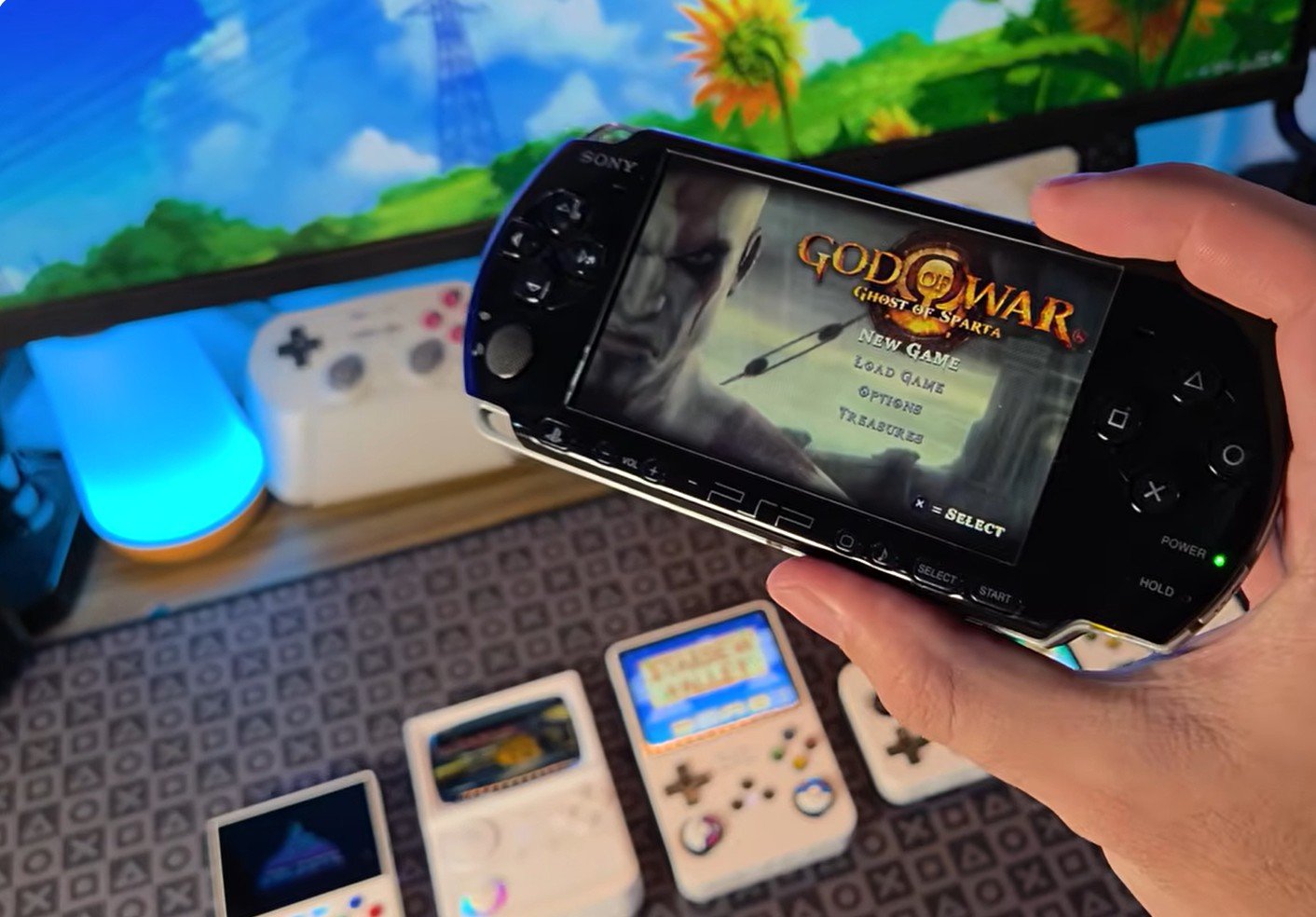
The PSP Experience: Running God of War: Ghost of Sparta on original hardware is incredible. It’s essentially a scaled-down PS2 experience that stays smooth because the hardware was built for it.
-
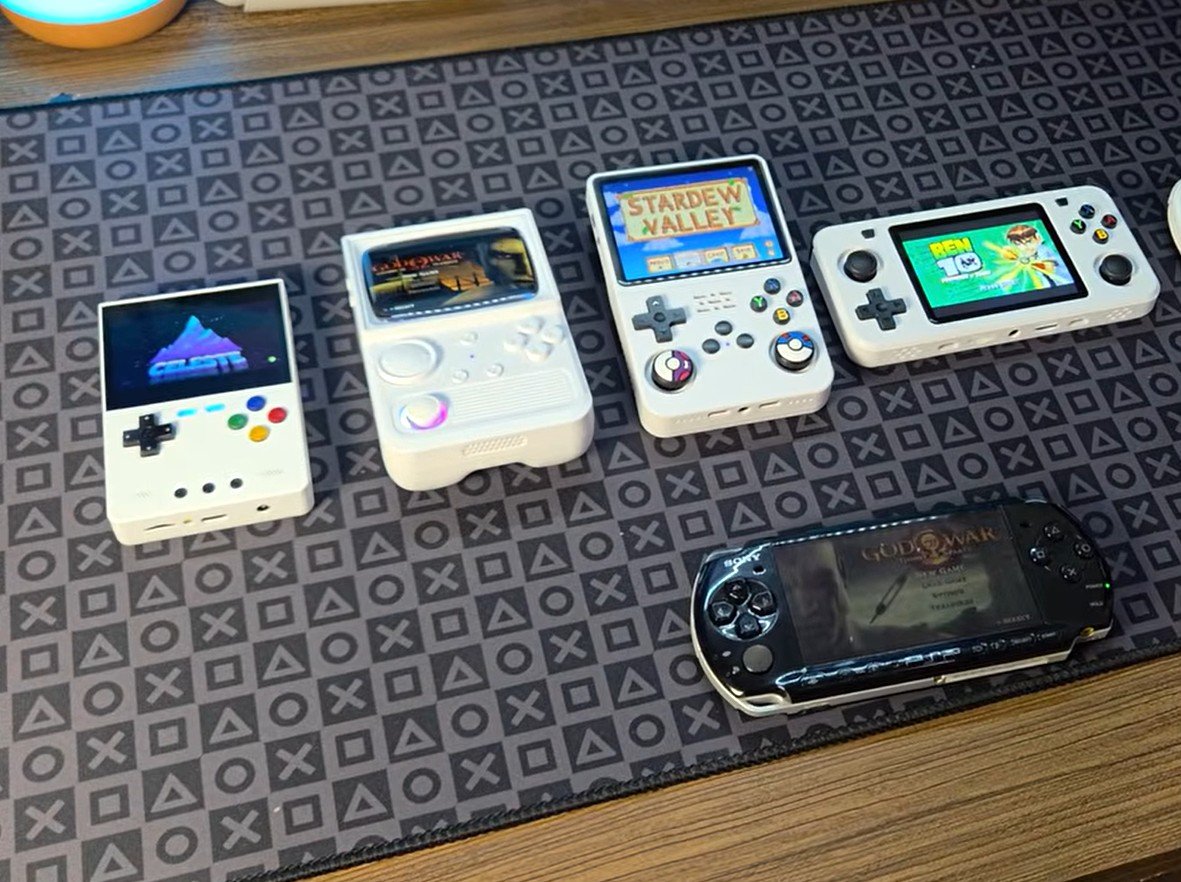
The Emulation Struggle: Even though Chinese handhelds can run PC ports like Celeste, Stardew Valley, or Balatro, many struggle to match the 1:1 original performance of the PSP library.
-
Retro Emulation: This is where the PSP fails. If you try to run Super Mario World (SNES) on a PSP, you might see it crawling at 15 FPS. It’s unacceptable. Chinese handhelds are built for this; they handle 8-bit and 16-bit systems flawlessly.
Also check out: PS Vita 2026 Buying Guide: Is the OLED 1000 or Slim 2000 Better for You
3. The “PortMaster” Advantage
If you want the best “bang for your buck,” the Chinese handhelds win because of PortMaster.
What is PortMaster? It’s a tool that allows these small devices to run native PC ports.
-
Library: There are over 1,300 games available, including GTA 3, Vice City, Half-Life, and even Minecraft Java Edition.
-
Performance: These games are optimized specifically for these low-power chips, providing a smooth experience that a stock PSP could never dream of.
4. Build Quality and Format
-
Horizontal vs. Vertical: Handhelds like the Trimui Smart Pro mimic the PSP’s horizontal layout, which is better for long sessions and PC ports. Vertical handhelds (like the R36S) mimic the Game Boy and are more compact.
-
Screen Quality: Even a cheap R$ 160 handheld today has a screen that puts the original PSP to shame in terms of brightness, saturation, and viewing angles.
5. The “GOAT” Factor: Why the PSP Still Wins
Despite being technically inferior in almost every modern metric, the PSP has one thing a Chinese handheld will never have: The Sony Soul.
-
Collectibility: For many, the PSP was a childhood dream. No R$ 160 device from AliExpress can replace the feeling of owning an official Sony console.
-
The Console Experience: The PSP has its own dedicated OS, physical UMD media (mini CDs), and a build quality that feels like a real “console” rather than a toy.
-
Nostalgia: This is why I own one. Even with a desk full of more powerful emulators, the feeling of playing on the original hardware is irreplaceable.
psp vs chinese handhelds 2
Pros and Cons Quick Comparison: Original PSP vs. Modern Chinese Handhelds
| Feature | Original Sony PSP | Chinese Handhelds (Trimui/R36S) |
| Pros |
Perfect PSP Gameplay: Native 1:1 performance.
Build Quality: Authentic Sony “Premium” feel.
Physical Media: Plays UMDs (Collector appeal). |
Screen Quality: Brighter, high-res modern displays.
PortMaster: Runs PC games like GTA and Celeste.
Retro King: Perfect 8-bit and 16-bit emulation. |
| Cons |
Terrible Retro Support: Struggles with SNES/NES.
Aged Tech: Screens are dim; proprietary chargers.
Used Hardware: Risk of battery/mechanical failure. |
Emulation Glitches: Not all PSP games run 100%.
Feel: Can feel more “toy-like” compared to Sony.
Setup: Requires more tinkering/SD card setup. |
The Verdict
If you want the authentic console experience and only care about PSP games, go with the Sony original. If you want a multi-purpose machine that plays PC ports, retro classics, and looks beautiful on a modern screen, the Chinese handhelds are the clear winner for your wallet.
-
Buy a Chinese Handheld (Trimui Smart Pro, R36S) if: You want a brand-new device, you love retro emulation (SNES, Genesis), and you want to play PC ports like Stardew Valley or GTA.
-
Buy a PSP if: You are a collector, you specifically want to play the PSP library with zero glitches, or you want to fulfill a childhood dream.
What do you think? Does nostalgia speak louder for you, or do you prefer the versatility of the new Chinese handhelds? Let’s chat in the comments!
Price Disclaimer
Note on Pricing: The prices mentioned in this article (converted from your local currency to US Dollars) are based on market averages and exchange rates at the time of writing in 2026. Because the PSP and PS Vita are discontinued legacy hardware, “collector pricing” can fluctuate wildly based on your local region (eBay vs. local marketplaces) and the console’s condition. For Chinese handhelds, prices often drop significantly during major sale events like AliExpress’s 11.11 or Choice Days. Always check multiple sellers before making a purchase!