
What if you could play your favorite PC and console games on Android—or even a 2011 handheld—with better performance and smoother gameplay? Hello everyone, Abiodun here. Nowadays, anyone can port games from almost any platform to almost any other platform, and a big reason is the amazing power of modern technology, including AI.
Today we’re talking about Android native ports, a hot topic that’s been catching the attention of gamers lately. Many players are exploring native ports as an alternative to traditional emulators, hoping to get better performance and a more optimized gaming experience on their mobile devices.
In this article, we’re going to break it all down: are native ports really better than emulators, how are they arriving on Android and PC at such crazy speeds, and how have developers even managed to get games like GTA IV and GTA V running on a PS Vita with only 512 MB of RAM?
Let’s get right into it.
What Are Android Native Ports?
To understand the hype, we first need to define what they are.
Android Native ports are versions of games or applications that have been adapted or rebuilt to run directly on the Android operating system.
For example, some PC games can be modified or “ported” to work on Android devices. This allows players to experience those games on their smartphones without necessarily relying on a traditional PC emulator.
Where It All Started: The Super Mario 64 Wave
First, a quick question: does anyone remember which port started this whole native port wave?
It was Super Mario 64. Many people think AI made it, but that is not the full story. The community studied the original game for years and rebuilt its code by hand, a process called decompilation. After that, developers brought it to PC, Android, and many other devices. Humans did the hard work first, and AI tools came later to speed things up.
3 Key Terms You Need to Know
To understand how modern game porting works, it helps to know three words you keep hearing:
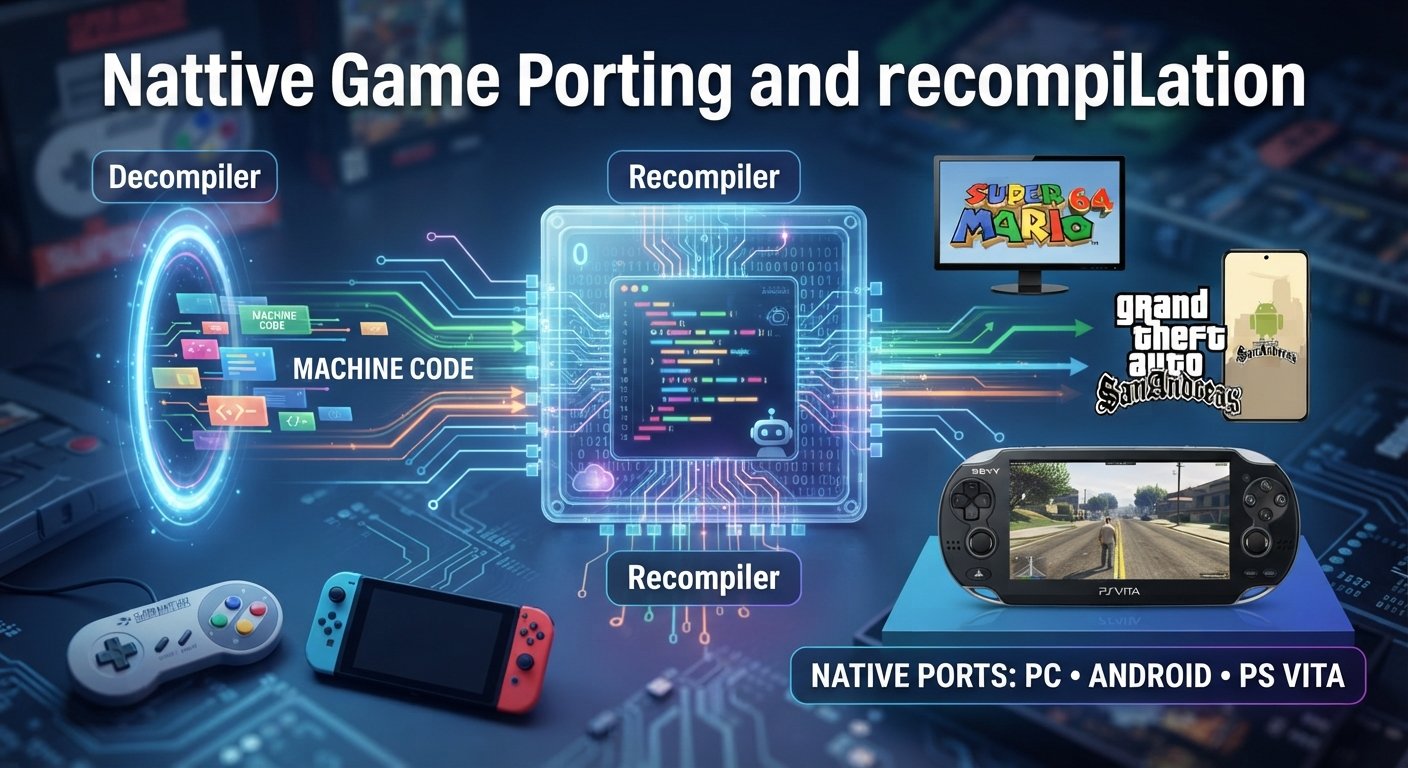
Emulation: A program pretends to be the old console, and the game runs on top of it.
Decompilation: People rebuild readable source code from a finished game.
Recompilation: A tool takes the machine code of a game and translates it into code your own device can run directly.
For example, Nintendo Switch static recompilation takes the ARM64 code of a Switch game and turns it into code for a normal PC. After that, the game runs like a regular program with no console pretending. Emulator developers, including the team behind Suyu, explained a lot of this knowledge to the world, and it is mostly open source.
Why Emulators Are the Real Foundation
Here is the part many people forget: none of this would exist without emulator developers.
They spent years learning how every console really works, how its graphics chip behaves, and how its system calls are handled. Recompilation projects stand on that knowledge. So when you see a great native port, remember that emulators built the road it travels on.
Where Does AI Fit In?
Tools like Claude can help developers read huge amounts of code, spot patterns, and write the repeated parts much faster. On some projects, it saves a massive amount of time and the developer mostly waits, checks, and fixes.
However, someone still has to test, debug, and make decisions. Think of AI as a very fast assistant, not the owner of the project.
Native Ports vs. Emulators: What’s the Difference?
This is the core question. While both methods let you play PC games on Android, how they achieve that goal is vastly different.
1. How Emulators Work
An emulator attempts to recreate or simulate another system’s environment (like a Windows PC) so that software designed for that system can run on your device (Android).
Depending on the emulator and the game, this simulation process can be very demanding, requiring significant additional processing power and resources to bridge the gap between two different architectures.
2. How Native Ports Work
Native ports, on the other hand, are adapted to work with Android. Instead of pretending your phone is a PC, the game’s code is rewritten or adjusted to speak Android’s “native language.”
Because of this direct communication, a well-optimized native port can offer:
Better performance
Smoother gameplay
More efficient resource usage
…compared to running the same game through an emulator.
Important Performance Caveats
However, it is crucial to understand that performance isn’t guaranteed to be better in every situation.
The success of a port depends on several critical factors:
How the game was ported: The skill and method of the developers matter immensely.
Optimization: A poorly optimized port can run worse than an emulated version.
Your Device Hardware: You still need a powerful enough Android device to run the game properly, even if it is native.
Performance: Why Some Consoles Are Easier to Port Than Others
Performance is where people often get confused. If a game already runs well in an emulator, its recompiled version usually runs great too because the hard problems are already solved. But if a game struggles in an emulator, a port will not magically fix it—a weak foundation gives weak results.
Xbox 360: Recompilation has grown very fast because the Xbox 360 is well understood and its emulator (Xenia) is already very mature. As a result, many games run well and ports are showing up on Android and PC.
PlayStation 3: The PS3 is a completely different story. Its Cell processor is famously complicated, and the RPCS3 emulator—even though it is a brilliant project—has to fight an extremely difficult base. That is why you see so few PS3 ports.
Honestly, it makes much more sense to port Xbox 360 games or PS4 games because those emulators give a much stronger and cleaner base to work from. The same goes for PSP, PS2, and PS Vita, which are generally easier targets.
Pushing the PS Vita Beyond Its Limits
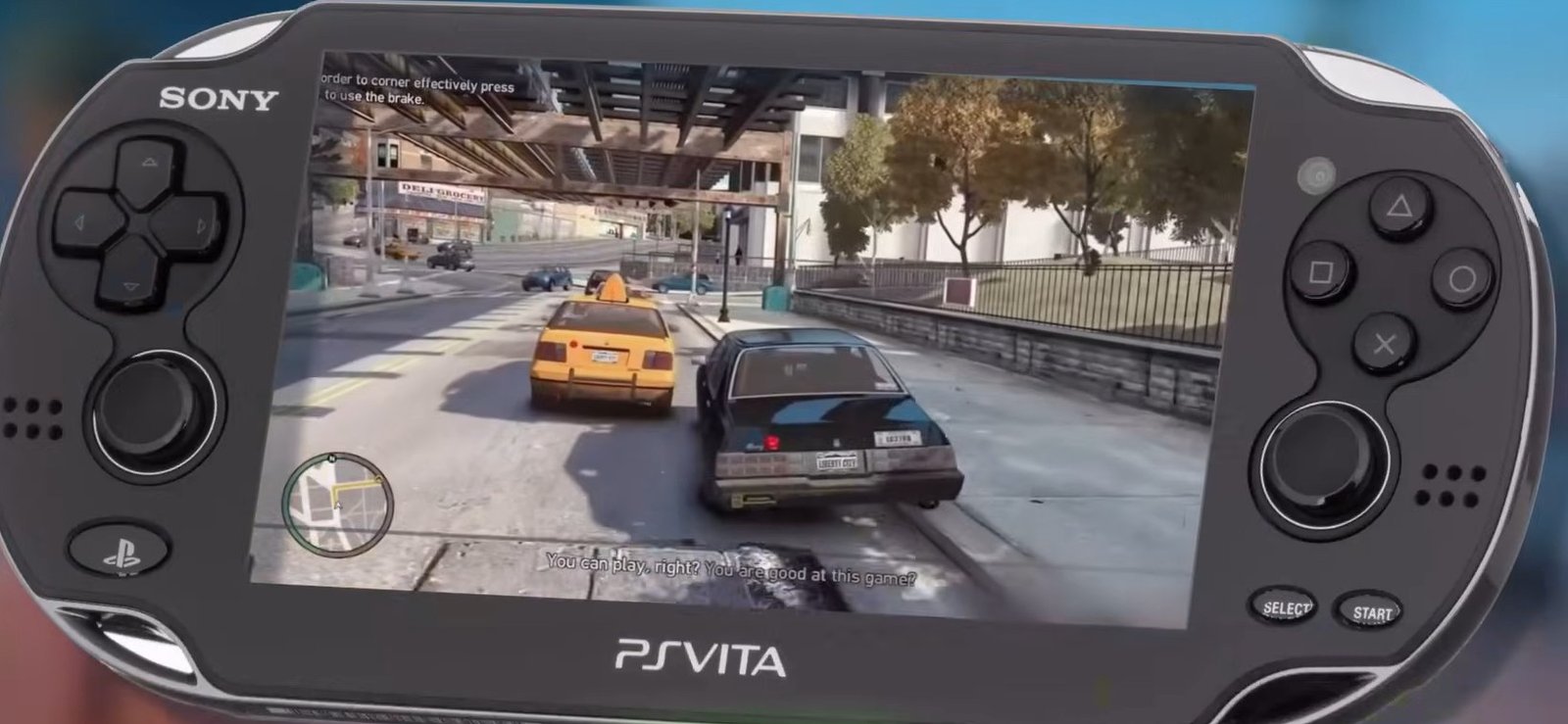
Now back to the PS Vita. It has only 512 MB of RAM and a very modest processor, yet developers have pushed it far beyond its limits:
GTA III and Vice City run on it through rebuilt engines (such as re3 community forks).
GTA: San Andreas runs through a wrapper/loader that uses the Android version.
GTA IV and GTA V have been shown running on Vita hardware in developer videos.
Safety Note: These GTA IV and GTA V showcases are demos, so always check the source before downloading anything—some fake files floating around online are actually harmful.
How is any of this possible on 512 MB of RAM?
Developers simplify the game. They compress data, remove expensive calculations, reduce polygons, and shrink textures. They also rebuild things like character motion, traffic, and vehicles into lighter versions so a car crash still looks believable while using far less memory. That is how a small handheld can carry a giant game.
Without emulators and the developers who give their time to the community, you would never see these native ports.
Official vs. Community Ports
Another important thing to understand is that not every native port works the same way.
Official Releases: Sometimes, game developers create official Android versions of their PC games (e.g., Stardew Valley, Grand Theft Auto: San Andreas). These are straightforward to install via the Play Store.
Community Developed Projects: These are more common for high-end PC games that don’t have official ports. Talented developers in the gaming community reverse-engineer PC games and rebuild the engine to run on Android.
These community projects may require additional game files (which you usually own from the PC version) or specific setup steps.
Legal and Safety Disclaimer
You should always make sure that you obtain game files legally and download porting tools from trustworthy sources. Using pirated game files or downloading executables from unknown websites carries significant security risks, including malware.
Conclusion
Overall, Android native ports are an exciting development for mobile gaming. They can make certain games playable directly on Android devices, sometimes with significant performance advantages over traditional emulation.
We are likely to see more and more of these projects emerge as mobile hardware continues to become more powerful.